Begin of page section:
Page sections:

  • Go to contents (Accesskey 1)
  • Go to position marker (Accesskey 2)
  • Go to main navigation (Accesskey 3)
  • Go to sub navigation (Accesskey 4)
  • Go to additional information (Accesskey 5)
  • Go to page settings (user/language) (Accesskey 8)
  • Go to search (Accesskey 9)

End of this page section. Go to overview of page sections

Begin of page section:
Page settings:

English en
Deutsch de
Search
Login

End of this page section. Go to overview of page sections

Begin of page section:
Search:

Search for details about Uni Graz
Close

End of this page section. Go to overview of page sections


Search

Begin of page section:
Main navigation:

Page navigation:

  • University

    University
    • About the University
    • Organisation
    • Faculties
    • Library
    • Working at University of Graz
    • Campus
    Developing solutions for the world of tomorrow - that is our mission. Our students and our researchers take on the great challenges of society and carry the knowledge out.
  • Research Profile

    Research Profile
    • Our Expertise
    • Research Questions
    • Research Portal
    • Promoting Research
    • Research Transfer
    • Ethics in Research
    • Commission for Scientific Integrity
    Scientific excellence and the courage to break new ground. Research at the University of Graz creates the foundations for making the future worth living.
  • Studies

    Studies
    • Prospective Students
    • Students
  • Community

    Community
    • International
    • Location
    • Research and Business
    • Alumni
    The University of Graz is a hub for international research and brings together scientists and business experts. Moreover, it fosters the exchange and cooperation in study and teaching.
Topics
  • Sustainable University
  • Researchers answer
  • Work for us
Close menu

End of this page section. Go to overview of page sections

Begin of page section:
You are here:

University of Graz Faculty of Humanities People Neu an der Fakultät
  • Our Faculty
  • People
  • Research
  • Study Services
  • Dean's Office

End of this page section. Go to overview of page sections

Begin of page section:
Sub navigation:

  • Our Faculty
  • People
  • Research
  • Study Services
  • Dean's Office

End of this page section. Go to overview of page sections

Researchers in portrait

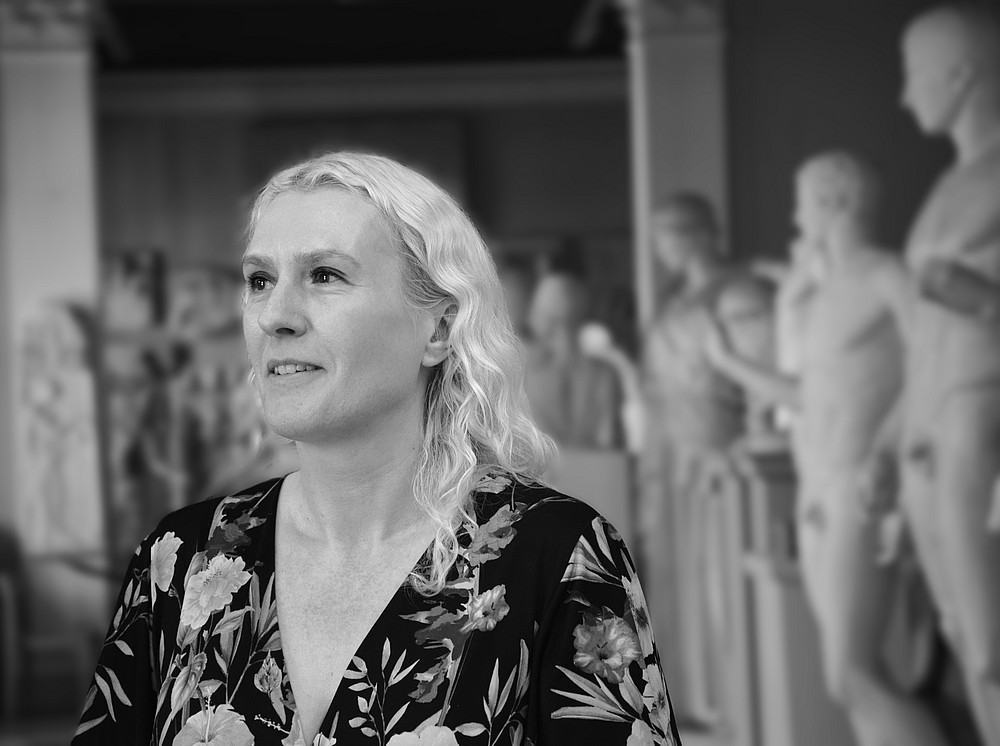
Britta Breser, Lecturer at the Institute of History

Rethinking democracy

What does democracy mean in everyday life – and how can it be brought to life? How can we strengthen democratic values, from early childhood education right through to university teaching? And what role do the media and international networks play in this? Britta Breser, an expert in democracy research at the University of Graz, is dedicated to addressing precisely these questions and is shaping the future of democracy education through projects and unique initiatives.

Unique in the German-speaking world

As deputy director of the newly established Forum for Democracy Research at the University of Graz, Britta Breser is creating an innovative space for democratic practice. The Forum is unique in the German-speaking world: it understands democracy not merely as an institutional process, but emphasises the ‘democratic’ – that is, attitudes and coexistence in everyday life. 

Britta Breser sitting at a table, holding some documents and with her sunglasses pushed back on her head ©Christian Jauschowetz
©Christian Jauschowetz

The aim is to connect the university with the city of Graz and a wide range of community groups, thereby working together on democratic processes. The forum provides a space for democracy research, exchange, workshops and joint projects designed to make democratic potential in society visible and usable. Of particular note here is the openness to collaboration with associations, neighbourhood groups and other stakeholders, thereby understanding democracy as a ‘work in progress’ and an ongoing process.

Democracy education from an early age

Britta Breser leads an international Erasmus+ project on democracy education in early childhood education (“Antibias education for early childhood teachers: learning through video coaching”). Together with partner institutions from Poland, Belgium, Norway and Spain, she is investigating how democratic attitudes and processes can be fostered as early as in nursery school. Research shows that, compared to other countries, Austria still has some catching up to do, particularly in terms of the professionalisation and further training of educators. The project focuses on workshops and training courses to strengthen democracy-building work before children start school and to constructively support social diversity from the very beginning. The results and the enthusiastic response from practitioners underline the need for and interest in early democracy education.

Media and Democracy

Another focus of Britta Breser’s work is the interplay between media and democracy. She draws on her experience as a journalist and explores the role of media in democratic processes: for example, through events with journalists and media representatives. Particularly at a time when digital media and algorithms are shaping public discourse, a critical engagement with media literacy and democratic participation is of great importance. Breser emphasises that we have all become ‘editors’ and that the university, as a place of exchange and reflection, can contribute to integrating media education and democracy education.

This is also reflected in her teaching. Here, Britta Breser places great emphasis on participatory approaches and encouraging her students. Democracy is not imposed from above, but negotiated together in everyday life. Breser sees herself as a learner and encourages her students to engage actively with controversies and conflicts. She also views democracy education as character development and focuses on resilience, networking and the promotion of critical thinking. Her courses are characterised by openness, an international perspective and a willingness to reflect on the undemocratic as a potential for democracy education.


Brita Breser has been a lecturer at the Institute of History in the Department of History Didactics since 2015. She was also Professor of Democracy Education at the University of Vienna from 2023 to 2026 and Professor of Political Education and Political Didactics at the Private University of Education in Graz from 2013 to 2023. She has undertaken research stays in Switzerland, Canada, Israel and Norway, as well as teaching visits to Belgium and Estonia. 


→ Anyone wishing to learn more about democracy research is welcome to attend the big UniVibes Festival on 29 May 2026, where Britta Breser will be taking part in a “Guided Tour”.

Portraits of scientists of the faculty

Sabine Schmölzer-Eibinger, Professorin für Deutsch als Zweitsprache und Sprachdidaktik
Şebnem Bahadır-Berzig, Professorin für Translationswissenschaft
Martin Klein: Professor für Philosophie der Antike und/oder des Mittelalters
Tanja Skambraks - Professorin für Geschichte des Mittelalters
Robert Felfe - Professor für Kunstgeschichte des 15. bis 17. Jahrhunderts
Clara Nicolay und Evelyn Urban - Universitätsassistentinnen am Institut für Kunst- und Musikwissenschaft
Matthias Grawehr - University Professor of Archaeology of Classical Antiquity at the Institute of Antiquity
Michael Schmidt - Assistant Professor at the Centre for the History of Science
Dieter Bacher - Assistant Professor at the Department of History
Stefano Saracino - Professor of Early Modern History at the Department of History
Harmen Grootenhuis -Assistant Professor at the Department of Philosophy
Urh Ferlež - Assistant Professor at the Department for Slavic Studies
Tabea Söregi - Assistant Professor at the Department of Cultural Anthropology and European Ethnology
Maria Katarzyna Prenner - Assistant Professor at the Department of Slavic Studies
Saptarshi Mallick - Assistant Professor at the Department of American Studies
Christina Mariella Fritz - Assistant Professor at the Department for Translation Studies
Walter Iber - Professor of Economic and Social History at the Department of History
Melanie Hendler - Assistant Professor at the Centre for Didactics of German as a Second Language & Language Education
Sarah Frühwirth - Assistant Professor at the Department of English Studies
Julian Blunk - University Professor of Art History from the 18th to the 20th Century at the Department of Art and Musicology

Begin of page section:
Additional information:

University of Graz
Universitaetsplatz 3
8010 Graz
Austria
  • Contact
  • Web Editors
  • Moodle
  • UNIGRAZonline
  • Imprint
  • Data Protection Declaration
  • Accessibility Declaration
Weatherstation
Uni Graz

End of this page section. Go to overview of page sections

End of this page section. Go to overview of page sections

Begin of page section:

End of this page section. Go to overview of page sections