Begin of page section:
Page sections:

  • Go to contents (Accesskey 1)
  • Go to position marker (Accesskey 2)
  • Go to main navigation (Accesskey 3)
  • Go to sub navigation (Accesskey 4)
  • Go to additional information (Accesskey 5)
  • Go to page settings (user/language) (Accesskey 8)
  • Go to search (Accesskey 9)

End of this page section. Go to overview of page sections

Begin of page section:
Page settings:

English en
Deutsch de
Search
Login

End of this page section. Go to overview of page sections

Begin of page section:
Search:

Search for details about Uni Graz
Close

End of this page section. Go to overview of page sections


Search

Begin of page section:
Main navigation:

Page navigation:

  • University

    University
    • About the University
    • Organisation
    • Faculties
    • Library
    • Working at University of Graz
    • Campus
    Developing solutions for the world of tomorrow - that is our mission. Our students and our researchers take on the great challenges of society and carry the knowledge out.
  • Research Profile

    Research Profile
    • Our Expertise
    • Research Questions
    • Research Portal
    • Promoting Research
    • Research Transfer
    • Ethics in Research
    Scientific excellence and the courage to break new ground. Research at the University of Graz creates the foundations for making the future worth living.
  • Studies

    Studies
    • Prospective Students
    • Students
  • Community

    Community
    • International
    • Location
    • Research and Business
    • Alumni
    The University of Graz is a hub for international research and brings together scientists and business experts. Moreover, it fosters the exchange and cooperation in study and teaching.
  • Spotlight
Topics
  • Sustainable University
  • Researchers answer
  • Work for us
Close menu

End of this page section. Go to overview of page sections

Begin of page section:
You are here:

University of Graz Faculty of Humanities Research Stories: Innovation und Inspiration Brunner, Kulturerbe, Baumgarten/Kogler
  • Our Faculty
  • People
  • Research
  • Study Services
  • Dean's Office

End of this page section. Go to overview of page sections

Begin of page section:
Sub navigation:

  • Our Faculty
  • People
  • Research
  • Study Services
  • Dean's Office

End of this page section. Go to overview of page sections

Jennifer Brunner and Angelika Heiling ©Uni Graz
©Uni Graz

African studies

The hunger for raw materials and migration movements are increasingly bringing Africa into focus and changing the Western perspective on the continent. However, despite growing interest in African countries, our ideas about them remain vague, and in many cases stubborn prejudices persist. 

Linguist Jennifer Brunner and cultural scientist Angelika Heiling are working to close these gaps in knowledge with the "African Studies" module series and to establish an African Science Hub in Graz. 

Brunner, who focuses primarily on the languages of Rwanda, Burundi and Tanzania, emphasises the well-functioning communication – for example, around 500 languages are used in Nigeria alone, and yet communication still works.

The African Studies module series is offered by the University of Graz's treffpunkt sprachen (language meeting place). It provides an overview of the extraordinary diversity and dynamism of languages in Africa and offers a taste of literature, art and culture.

To the Unizeit article (2025)

Visible history

Old atlases, unique cityscapes, secret letters and valuable scientific documents from the collections of the University of Graz have been meticulously digitised and made technologically fit for the future.

Funded by the Federal Ministry of Culture and Sport, the Institutes of Linguistics and Digital Humanities, the University Archives, the University Museums and the Special Collections of the University Library joined forces in 2023 to preserve some of their historical holdings for the long term as part of the "Digital Cultural Heritage" project. The objects were scanned, enriched with metadata and published on various online platforms.

55,000 works are now available to the general public, revealing a piece of cultural identity.

To the Unizeit article (2024)
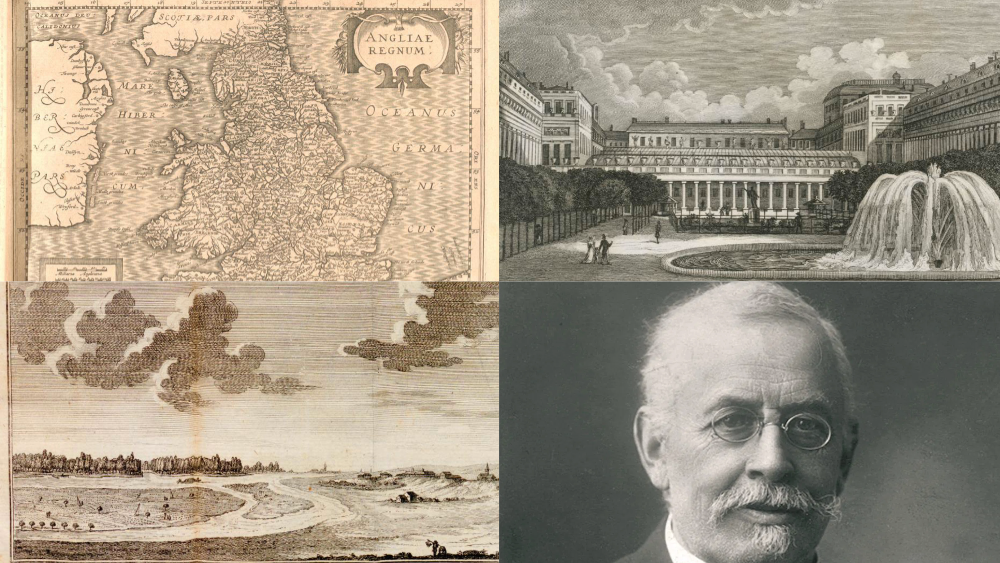
Four-part image: Angliae Regnum; The Palais Royal in Paris from the garden side; Vienna's eastern district; Portrait of Hugo Schuchardt ©Universitätsbibliothek Graz
©Universitätsbibliothek Graz
Stefan Baumgarten and Susanne Kogler in conversation ©Uni Graz/Pichler
©Uni Graz/Pichler

Critical thinking as a way out of the impasse

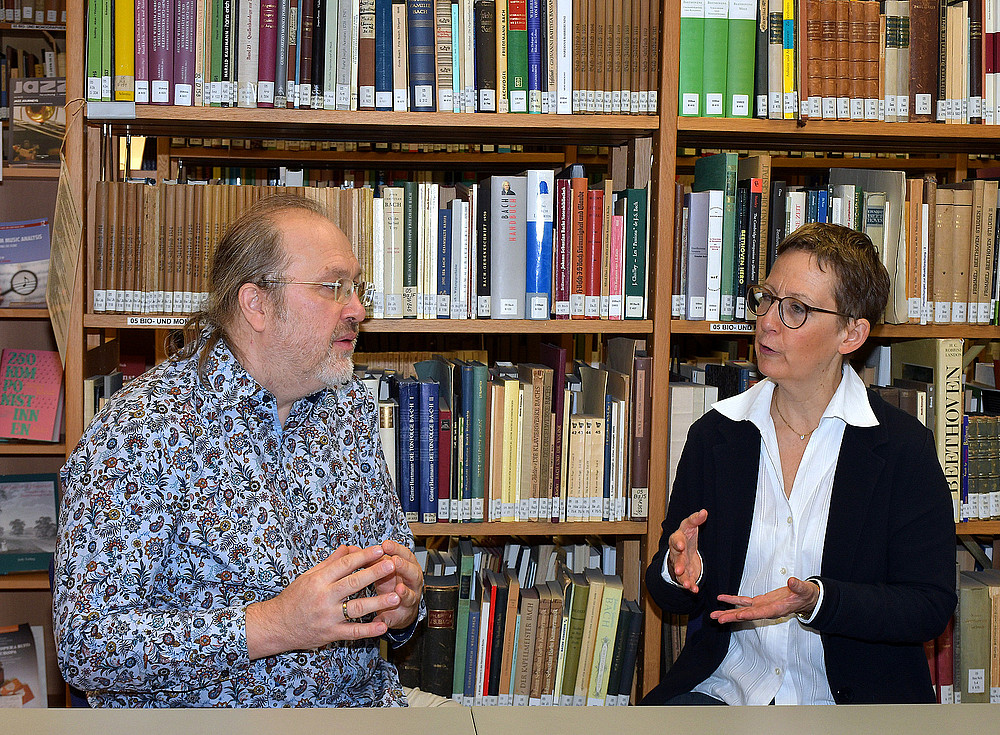
Climate change, social division and authoritarian political developments are just some of the enormous challenges of our time. To overcome them, we first need to be aware of the ideas and beliefs that have brought us to this point, according to translation scientist Stefan Baumgarten. He calls for radical thinking that is "critical, wild and open". This also means thinking in complex ways, incorporating science, empathy and emotions instead of polarising. Musicologist Susanne Kogler picks up on this and emphasises the importance of self-reflection as a major contribution to critical practice. It is important to shed light on how thought patterns and ideologies shape our perception and how our perception can promote or even prevent critical thinking.

The two scholars have initiated the research project "Radical Thinking in the Anthropocene".

To the interview with Stefan Baumgarten and Susanne Kogler (2024)

On the focus area "Perception: Episteme, Aesthetics, Politics" of the Faculty of Humanities at the University of Graz

Begin of page section:
Additional information:

University of Graz
Universitaetsplatz 3
8010 Graz
Austria
  • Contact
  • Web Editors
  • Moodle
  • UNIGRAZonline
  • Imprint
  • Data Protection Declaration
  • Accessibility Declaration
Weatherstation
Uni Graz

End of this page section. Go to overview of page sections

End of this page section. Go to overview of page sections

Begin of page section:

End of this page section. Go to overview of page sections