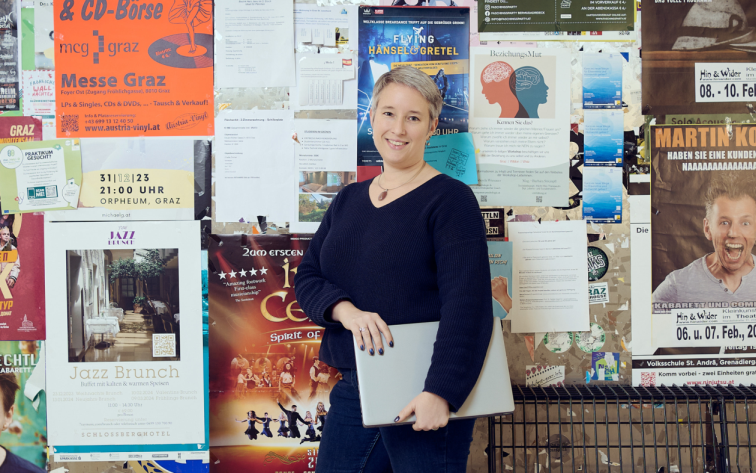
Can artificial intelligence create art?
AI is capable of writing texts, taking photos, painting pictures and composing music. But is that still art? "Yes, even if it is hotly debated," says musicologist Susanne Kogler. "Artists respond to their environment, critically engage with their time and explore the limits of technical possibilities, at least according to an avant-garde understanding of art." It is their job to work against the mainstream, to break habits and to push the boundaries of tradition.
Accordingly, Kogler wants to make the possibilities of the new digital tools part of her course content. The aim is to use the tools in a targeted manner and then to evaluate the results generated by AI correctly. However, the researcher takes a critical view of automatically produced works, such as those already used by the entertainment industry: "Progress and innovation cannot succeed without human intervention," Susanne Kogler is convinced.
To the Unizeit article (2024)
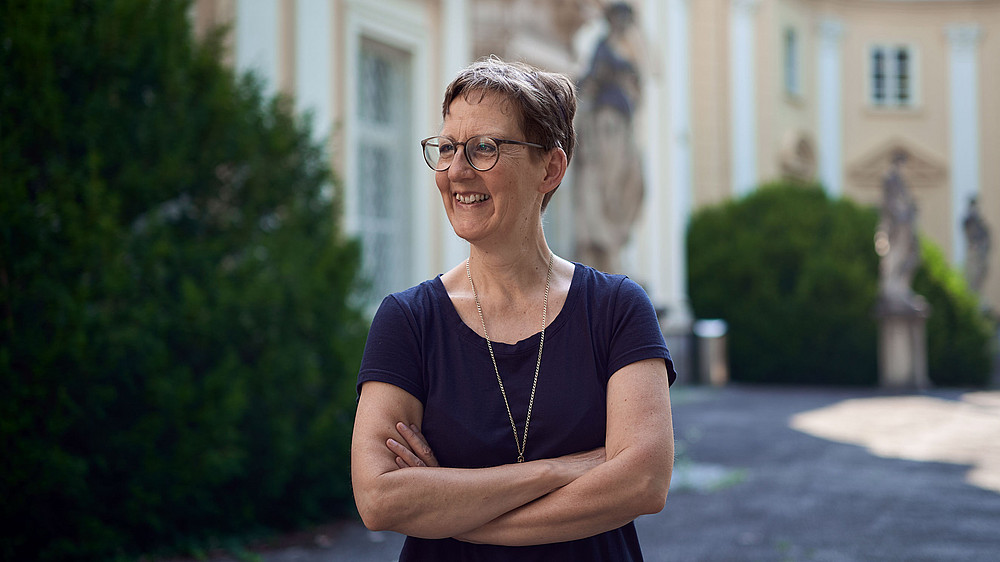

Do we still need translators at all?
Thanks to Google Translate, DeepL and ChatGPT, communication barriers can be overcome at the click of a mouse. "The results sound good and are becoming increasingly useful. However, the programmes learn almost exclusively from human translations," emphasises Michael Tieber, university assistant at the Institute for Translation Studies. And that is purely computing power, because "the programmes don't know what they are doing. They have difficulties with phenomena that do not occur in the training data," explains the researcher. Content deficits, incorrect or contextually inappropriate terms are therefore not uncommon.
What is the best way to deal with machine translation? It is not a mistake to ask for a translation suggestion. "But as a human being, I have to be able to assess how usable it is and where it needs to be modified," the researcher explains. Translation is not simply a matter of exchanging words; in addition to the correct technical terms, it is also about the style, which must be appropriate to the situation. So it's also about empathy.
The University of Graz is in the process of adapting its curricula and integrating digital skills and translation technologies more strongly. "At the same time, we want to convey the awareness that humans still offer great added value compared to machines," Tieber explains.
To the Unizeit article (2024)
Learning made easy
"The right environment and simple, clearly structured documents are incredibly helpful," explains Elke Höfler, assistant professor of media and language didactics at the Institute of Romance Studies. The human brain has limited "working memory", and any kind of distraction – including not only the party in the neighbouring flat, but also lavish formatting, useless graphics or irrelevant additional information in the script – consumes capacity that is then lacking for learning.
To increase retention and deepen understanding, Höfler recommends involving as many senses as possible: "Reading a passage from a script aloud while standing on one leg or a balance board, or while walking, can help, as long as you feel comfortable doing so." Handwritten notes are more suitable for the library than gymnastics exercises. "The movement of the hand stimulates the brain, and we usually summarise the essentials in the process," says the researcher. There are also a number
of advantages to learning in groups: when you ask and answer questions and discuss the content, it sticks in your mind more quickly. Studying alone is efficient if you actively engage with the material. "Underlining, summarising, drawing mind maps or infographics creates cross-connections and helps us retain what we have learned," explains Höfler. She provides detailed tips and scientific explanations in her blog Digitalanalog.
To the Unizeit article (2024)