Caught in the war
Thirty years after the genocide in Srebrenica, Serbia and the Republika Srpska still lack the political will to come to terms with the past. Nationalist narratives and the instrumentalisation of memory prevent reconciliation and deepen the division within society. Civil society initiatives such as Women in Black, Documenta in Zagreb and the former Research and Documentation Centre in Sarajevo offer hope. They are committed to education and dialogue across ethnic boundaries. "We must support these forces," says historian Heike Karge. In her teaching and research, she has been committed to international cooperation and remembrance work for years. She particularly emphasises the importance of civil society work, which "devotes a great deal of energy to asserting its place against nationalist agendas". At the same time, Karge sees major challenges in the lack of prospects, emigration and lack of access to European exchange – problems that weigh heavily on the future of the region.
To the Unizeit article (2025)
Language barriers in everyday life
How communication can work in a multilingual society is the subject of research by Şebnem Bahadır-Berzig, Professor of Translation Studies. Her focus is on people who have received little attention in research to date: "In everyday life, it is often children or volunteers who ensure communication. However, too little consideration is given to their needs and reliability." Some children are annoyed or stressed, or they just enjoy it.
This is particularly problematic in legal advice for refugees and in healthcare: "In these very precarious situations, it seems to be overlooked that the quality of the interpreting must be just as high as that of the advice," criticises Bahadır-Berzig.
Students can prepare for interpreting in emergency or crisis situations in courses, where they learn to pay attention to their own resources, maintain personal boundaries and not neglect self-care.
To the Unizeit article (2025)
Digital puzzle game - putting together a 1500-year-old altar slab
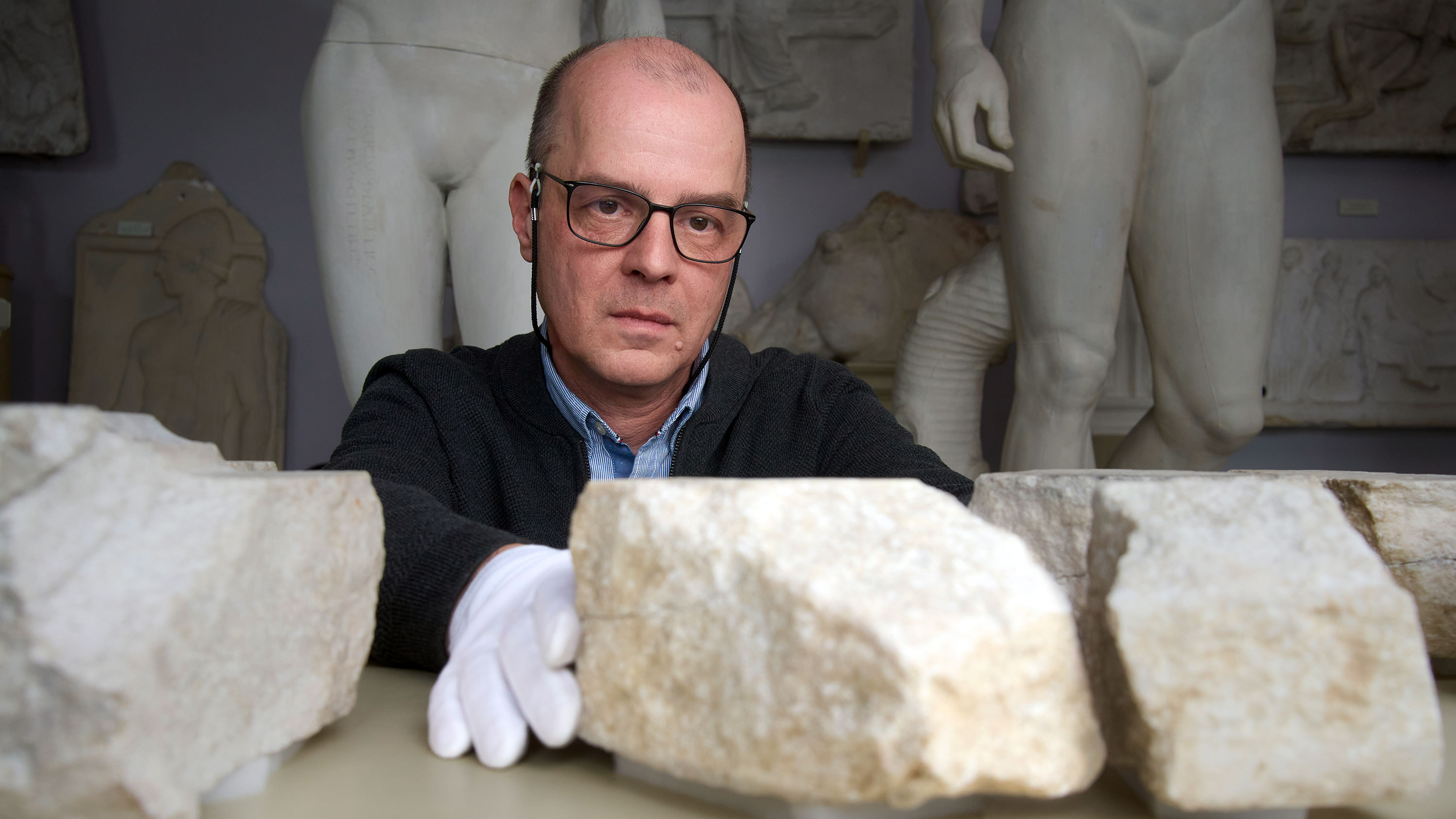
Passionate puzzle players are wanted. The task: to reassemble a 1,500-year-old marble altar slab, broken into many small pieces, which belonged to the early Christian bishop's church in Lavant, East Tyrol. The particular challenge: not all the pieces are still there, and the remaining fragments are chipped.
After archaeologists had made several attempts to piece the fragments together since the 1950s, new approaches were now being taken: the fragments were restored and digitised under the direction of archaeologists Stephan Karl and Paul Bayer. Together with Reinhold Preiner, a computer scientist at Graz University of Technology, a digital puzzle game was created. Players do not work alone, but simultaneously and together with other interested parties from across the population, because "people who are not experts bring new perspectives. In addition, such a project offers the opportunity to get people excited about science and break down barriers," says Karl. This type of science communication – "open reassembly" – could be used in museums "to bring archaeology to life and make it a playful experience."
To the Unizeit article (2024)
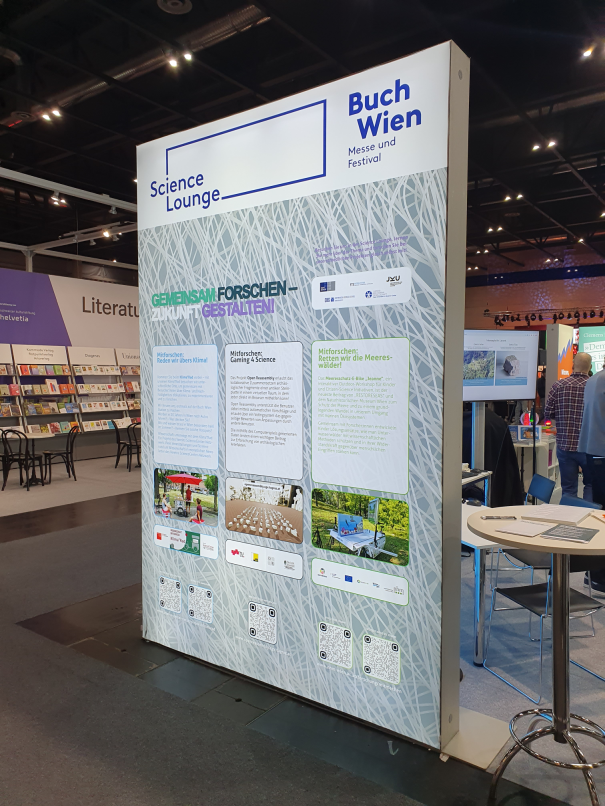
The digital puzzle game made a big splash at Buch Wien (20–24 November 2024): visitors to Austria's largest book fair were able to find out about the exciting project in the Science Lounge under the motto "Together against science scepticism". And especially for a young target group (children and young people), the workshop "Mitforschen: Gaming 4 Science" (Join the research: Gaming 4 Science) was on the programme.