Begin of page section:
Page sections:

  • Go to contents (Accesskey 1)
  • Go to position marker (Accesskey 2)
  • Go to main navigation (Accesskey 3)
  • Go to sub navigation (Accesskey 4)
  • Go to additional information (Accesskey 5)
  • Go to page settings (user/language) (Accesskey 8)
  • Go to search (Accesskey 9)

End of this page section. Go to overview of page sections

Begin of page section:
Page settings:

English en
Deutsch de
Search
Login

End of this page section. Go to overview of page sections

Begin of page section:
Search:

Search for details about Uni Graz
Close

End of this page section. Go to overview of page sections


Search

Begin of page section:
Main navigation:

Page navigation:

  • University

    University
    • About the University
    • Organisation
    • Faculties
    • Library
    • Working at University of Graz
    • Campus
    Developing solutions for the world of tomorrow - that is our mission. Our students and our researchers take on the great challenges of society and carry the knowledge out.
  • Research Profile

    Research Profile
    • Our Expertise
    • Research Questions
    • Research Portal
    • Promoting Research
    • Research Transfer
    • Ethics in Research
    Scientific excellence and the courage to break new ground. Research at the University of Graz creates the foundations for making the future worth living.
  • Studies

    Studies
    • Prospective Students
    • Students
  • Community

    Community
    • International
    • Location
    • Research and Business
    • Alumni
    The University of Graz is a hub for international research and brings together scientists and business experts. Moreover, it fosters the exchange and cooperation in study and teaching.
  • Spotlight
Topics
  • Sustainable University
  • Researchers answer
  • Work for us
Close menu

End of this page section. Go to overview of page sections

Begin of page section:
You are here:

University of Graz Faculty of Humanities Research Stories: Innovation und Inspiration Arsenijevic, Moser, Hafner
  • Our Faculty
  • People
  • Research
  • Study Services
  • Dean's Office

End of this page section. Go to overview of page sections

Begin of page section:
Sub navigation:

  • Our Faculty
  • People
  • Research
  • Study Services
  • Dean's Office

End of this page section. Go to overview of page sections

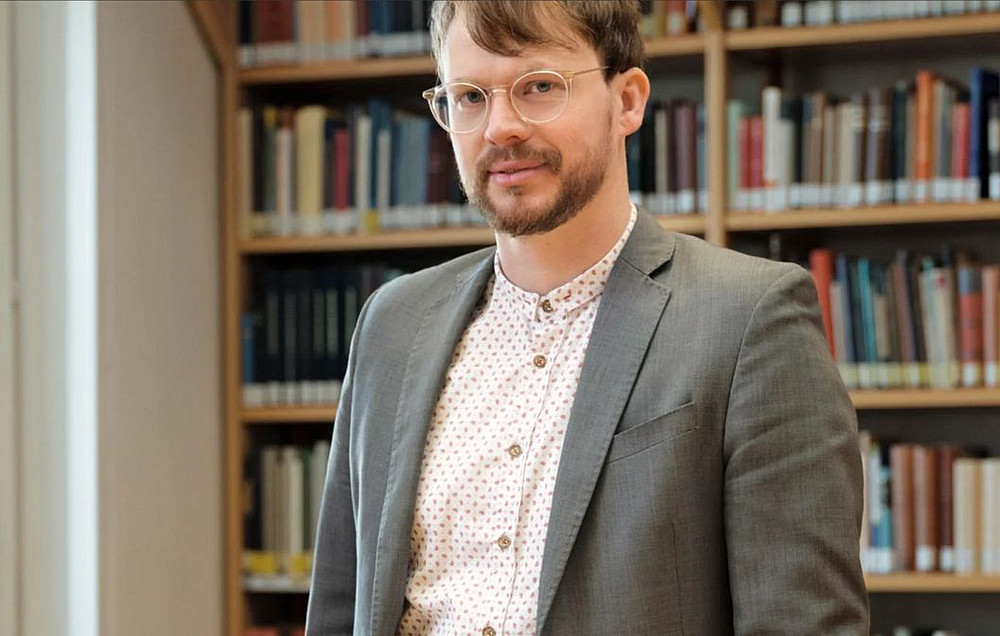
Boban Arsenijevic ©Uni Graz/wildundwunderebar
©Uni Graz/wildundwunderebar

More competent with AI

Boban Arsenijevic is convinced that automated translation programmes can make coexistence easier. The professor of Slavic linguistics is an expert in computational linguistics and is working to improve the skills of graduates.

"Even free AI systems facilitate access to information because they can translate content into a wide variety of languages. They are also always available and much faster and more efficient than humans," summarises Boban Arsenijevic.
The researcher himself is working on teaching such automated tools to speak correctly (see UNIZEIT 1/2020). He sees great added value in machines: "Artificial intelligence is capable of analysing large amounts of data, extracting patterns and making data-supported predictions. In this way, it enriches multilingualism in a way that we humans would not be able to achieve."

However, the Slavicist is not only training machines; the contemporary education of his students is just as important to him. In doing so, he emphasises the high value of problem-solving skills, critical thinking, data analysis and management skills.

To the Unizeit article (2024)

Is equal fair?

Right-wing populism envisages it as an ideal: a society in which everyone shares the same values and norms, according to which they judge what is right and wrong. Where "normal" is the measure of all things and there is no place for people with "different" needs and desires. But how does this concept fit in with the principle that all people are of equal value, enjoy equal rights and are entitled to the same standards? A thought experiment with philosopher Elias Moser.

To the Unizeit article (2023)
Photo Elias Moser ©Manuel Schaffernak
©Manuel Schaffernak
Markus Hafner © Manuel Schaffernak
© Manuel Schaffernak

Anonymous ancient texts as promising sources

"We view ancient works through a very narrow lens. What has been preserved is mainly what was passed on in imperial and late antique schools and copied in the scriptoria of medieval monasteries," says Markus Hafner. However, this is only a small part of reality, which mainly reflects patriarchal society.

As part of a project for which he recently received a prestigious Starting Grant from the European Research Council, Hafner is working on anonymous texts such as graffiti, aphorisms and jokes. These reflect the diversity and colourfulness of antiquity and give space to voices that have not been heard before.

To the Unizeit article (2023)

Begin of page section:
Additional information:

University of Graz
Universitaetsplatz 3
8010 Graz
Austria
  • Contact
  • Web Editors
  • Moodle
  • UNIGRAZonline
  • Imprint
  • Data Protection Declaration
  • Accessibility Declaration
Weatherstation
Uni Graz

End of this page section. Go to overview of page sections

End of this page section. Go to overview of page sections

Begin of page section:

End of this page section. Go to overview of page sections