Eps. II: Artificial intelligence - better than it should be?
What do philosophers and physicists have in common and why are they so interested in AI?
Isabell Piantschitsch (Institute of Physics) and Philipp Berghofer (Institute of Philosophy) talk to Philipp Spitzer (chemist and science communicator) about their joint project "Deep Learning in Natural Sciences and Philosophy - What epistemological role does artificial intelligence play in basic research?"
The interests of mathematician, physicist, and philosopher Isabell Piantschitsch and philosopher and physicist Philipp Berghofer overlap in many areas, and one could say that they speak the same (scientific) language. Currently, the two are researching another shared interest: artificial intelligence. How does it work, and why does it sometimes provide better data for research than it theoretically should? How is this data handled, and what impact does AI actually have on research and everyday life? These and other questions are being explored by the two researchers as part of their project "Deep Learning in Natural Sciences and Philosophy."
As part of the project, the conference DELPHI (Deep Learning & Philosophy Conference) take place at the University of Graz. At this conference, scientists from a wide range of disciplines—from neural engineering and social and legal sciences to astrophysics—will discuss the great potential and risks of applying artificial intelligence. Learn more about the project and why philosophy and physics fit so well together in the second season of the podcast series "When Two Meet."
Podcast Eps. II - Artificial intelligence: better than it should be (in german)
Spotify
YouTube

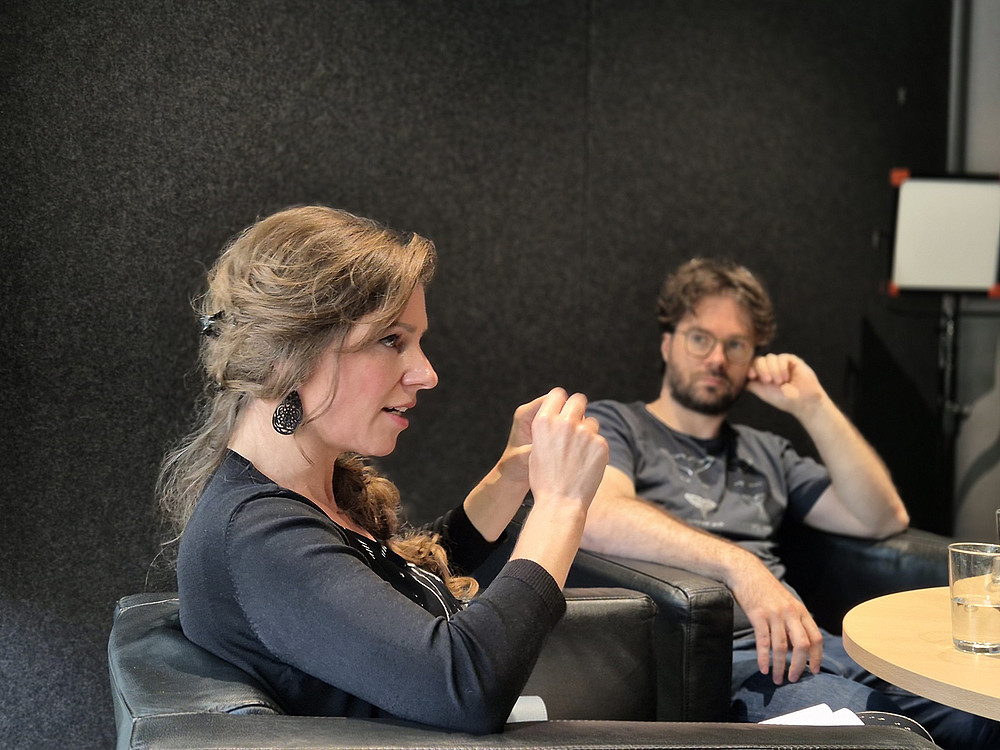
The interests of mathematician, physicist and philosopher Isabell Piantschitsch and philosopher and physicist Philipp Berghofer overlap in many areas and you could say that they speak the same (scientific) language. The two are currently researching another common interest: Artificial intelligence. How does it work and why does it sometimes provide better data for research than it should be able to? How is this data handled and what impact does AI actually have on research and everyday life? The two researchers are addressing these and other questions as part of their project "Deep Learning in Natural Sciences and Philosophy". As part of the project, the conference DELPHI (Deep Learning & Philosophy Conference), where scientists from a wide range of disciplines - from neural engineering to social sciences, law and astrophysics - will discuss the high potential and risks of artificial intelligence. You can find out more about the project and why philosophy and physics go so well together in the second series of the podcast "Treffen sich zwei".
Podcast Eps. II - Artificial intelligence: better than it should be
Spotify
YouTube